I batch-ran EMA and MACD strategies across many tickers with BatchBacktesting — FMP for equities, Binance for crypto. This post explains what the runner does, how to read outrageous leaderboard rows, and why that is not a live trading system. Version française.
What BatchBacktesting is
A Python project that:
- Pulls OHLCV via Financial Modeling Prep (S&P list) or Binance (crypto list).
- Applies a strategy class (EMA or MACD) per ticker.
- Writes CSV + optional HTML charts under
output/.
It is a screening hammer, not a portfolio manager.
Install and run (sketch)
pip install numpy httpx rich backtesting pandas_ta
from batch_backtesting import run_backtests, EMA, MACD

tickers = get_SP500()
run_backtests(tickers, strategy=EMA, num_threads=12, generate_plots=True)
run_backtests(get_all_crypto(), strategy=MACD, num_threads=12, generate_plots=True)
Exact imports and API keys live in the GitHub README — do not commit keys.
Interpreting example leaderboard rows
From an EMA batch (illustrative):
| Ticker | Return | Gut check |
|---|---|---|
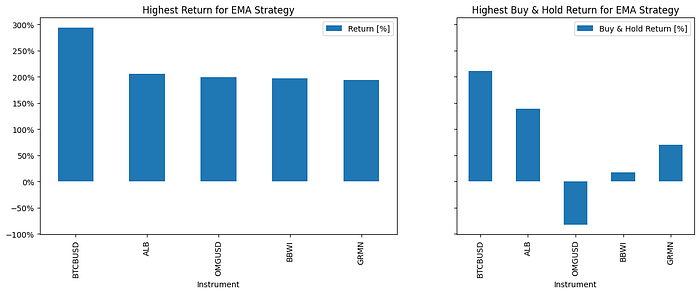
| BTCBUSD | +293% | Crypto volatility + parameter fit |
| BTTBUSD | -99% | Penny-style blow-up — liquidity not modeled |
| UAL / NCLH | deep negative | COVID-era windows punish naive trend rules |
Top and bottom lists are diagnostics, not buy/sell lists. Always open the per-ticker chart (example AAPL chart) before storytelling.
What the Medium import left out on purpose
The original article embedded long pasted code blocks for every helper — maintenance belongs in the repo, not this Hugo page. For:
- HTTP helpers, threading, CSV writers → see
BatchBacktestingsource. - Full French walkthrough → Medium canonical URL.
When not to use this
| Misuse | Why it hurts |
|---|---|
| Deploy top row ticker live | Overfit to window |
| Ignore fees/slippage | Backtest inflates |
| Skip out-of-sample dates | Regime change breaks rule |
Takeaway
Batch runs teach distribution of outcomes under a dumb rule — invaluable for humility, dangerous as autopilot.
Related posts
- Multiple indicators backtesting — scaled leaderboard version
- MarketWatch Python — paper trading API
- Monte Carlo risk bands
Originally published on Medium.