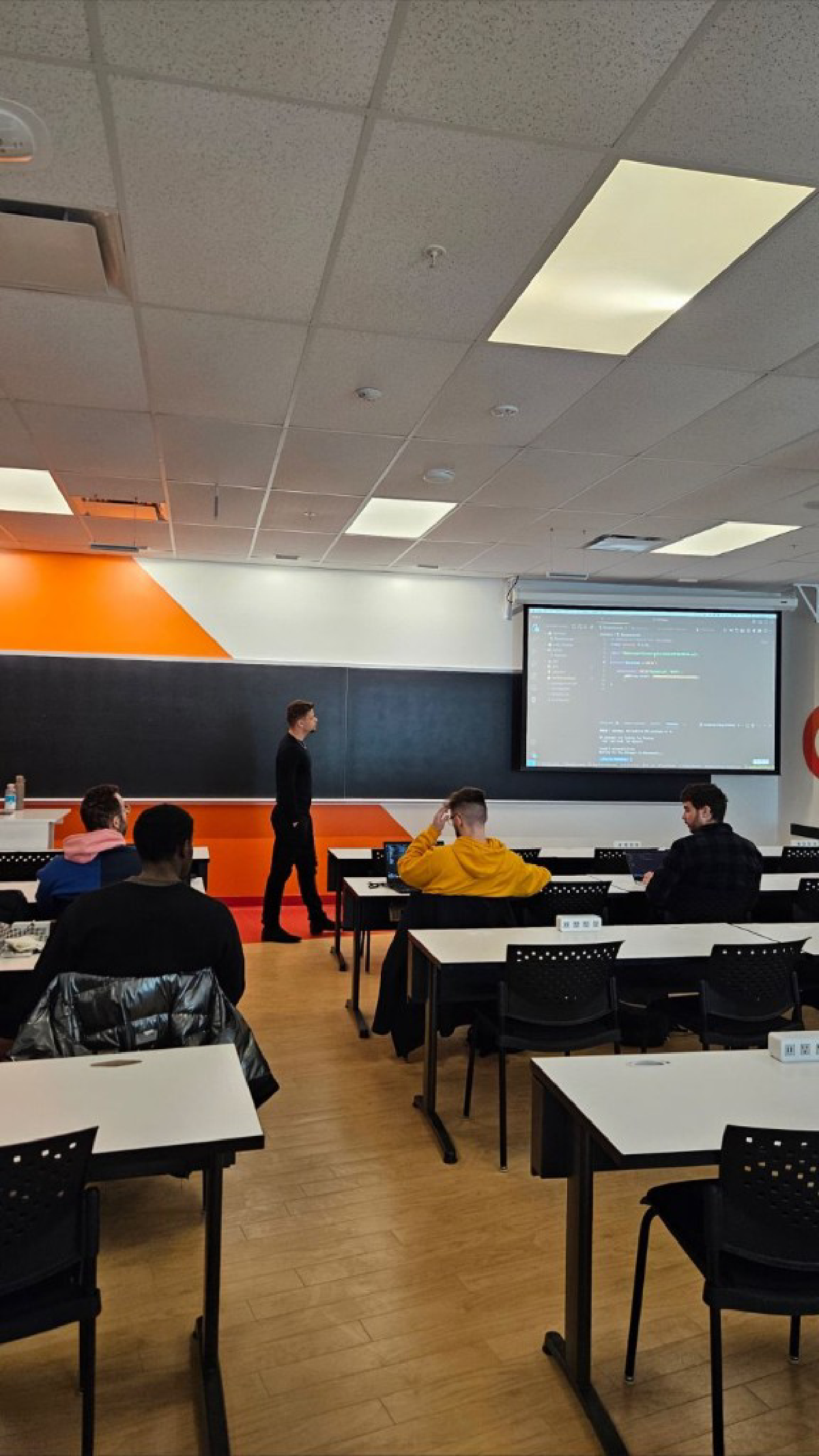
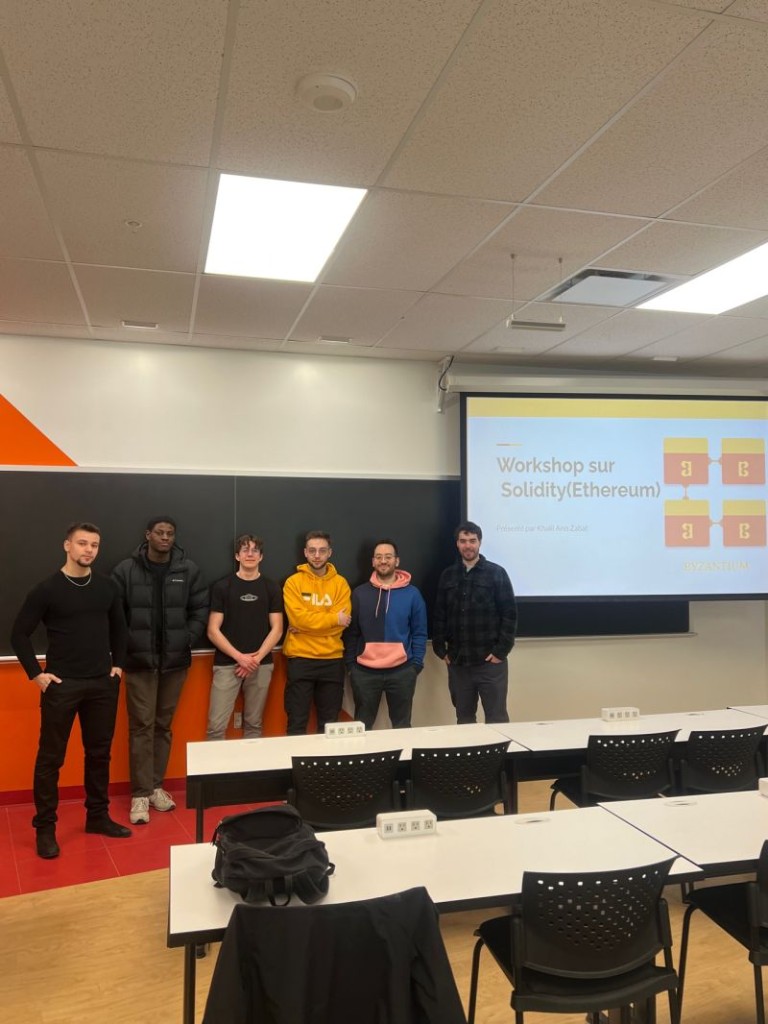
On 11 March 2024, Byzantium ran its first Ethereum workshop at ÉTS: a hands-on evening where people who had never touched a chain left with a testnet token they could send to a friend. Khalil Anis Zabat led the session in French; this page is the English recap. Version française has the same story with a bit more room for detail.
What we actually did
The arc was deliberate and beginner-friendly:
- Remix in the browser — compile and deploy without installing a full toolchain first, so you could redo the steps at home.
- A local dev setup (editor + node tooling) — the “how professionals repeat this” half, with the same ERC-20 idea carried over.
- Sepolia — test ETH from a faucet, MetaMask as the wallet, Infura (or similar) as the RPC bridge because nobody has a direct door into the chain.
- OpenZeppelin — don’t reinvent
transfer; inherit battle-tested ERC-20 and focus on name, symbol, decimals, and an initial mint. - Peer transfers — deploy, copy contract addresses, and send tokens to each other until the room felt like a tiny economy.
That last step matters. Until you push a transaction and see it on a block explorer, Solidity is just syntax. Afterward it is a public ledger with your name on one line.
The token we started from
Khalil walked through a minimal mintable ERC-20 — roughly:
// SPDX-License-Identifier: MIT
pragma solidity ^0.8.20;

import "@openzeppelin/contracts/token/ERC20/ERC20.sol";

contract MyToken is ERC20 {
    constructor() ERC20("MyToken", "MTK") {
        _mint(msg.sender, 1000000 * 10 ** decimals());
    }
}
You pick name and symbol, set decimals (often 18), and mint an initial supply to msg.sender (the deployer). OpenZeppelin is the community’s shared library for standards — the same idea as ERC-721 for NFTs, but here we stayed on fungible tokens.
Concepts that came up in Q&A
These were the live questions, not slide titles — worth keeping for anyone revisiting the workshop vibe.
Block explorers (Etherscan, Sepolia variants). Every transaction is a row: who sent what, to whom, gas paid, block number. Indexers and companies building on Ethereum rely on that history; you can literally search an address and walk the graph of past calls.
Gas and limits. Contracts are not unconstrained Turing machines in practice — infinite loops can burn gas and stall. Developers set gas limits; users pay for execution. Mainnet fees were discussed as “real money” (on the order of tens of dollars for busy periods in 2024); Sepolia kept the lesson affordable.
ABI = the skeleton. After deploy, the ABI is how apps (or bots) know which functions exist. Khalil gave a stage example: watch a contract’s mint with a timer, filter mempool traffic, prioritize with higher gas — the kind of automation people build on top of public ABIs, not magic.
On-chain vs off-chain data. Storage on-chain is expensive. Patterns point to hashes or URIs (IPFS, storage chains) for bulky data; the chain holds the reference, not the JPEG. Keep the contract small.
Decentralization (opinions in the room). Side debate: maximal decentralization vs pragmatic bridges for enterprises while the stack matures. No verdict — useful tension for a student club workshop.
Room and energy
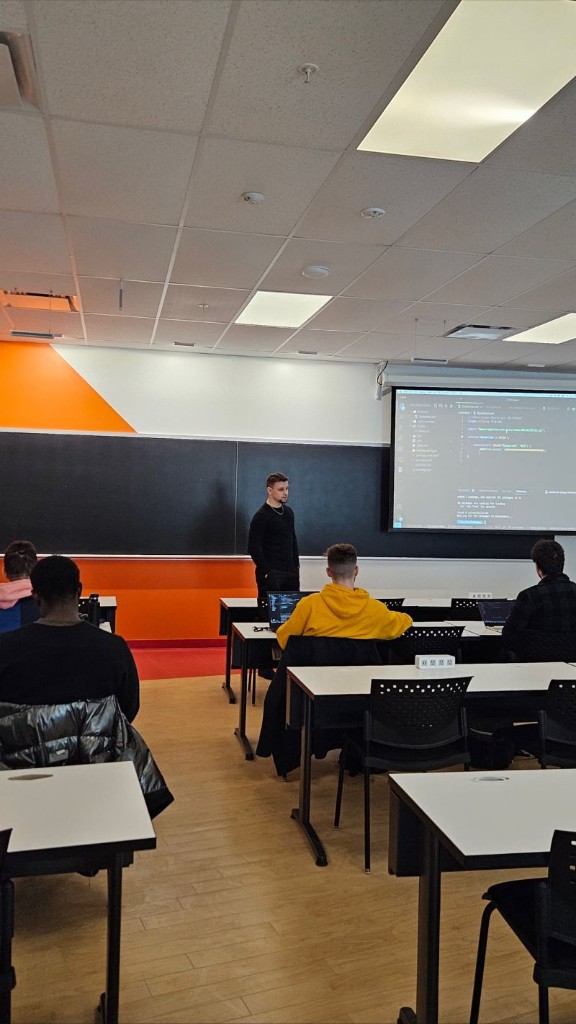
Tables, power strips, and laptops open — good for pairing when Remix threw a curveball or MetaMask asked for another confirmation.
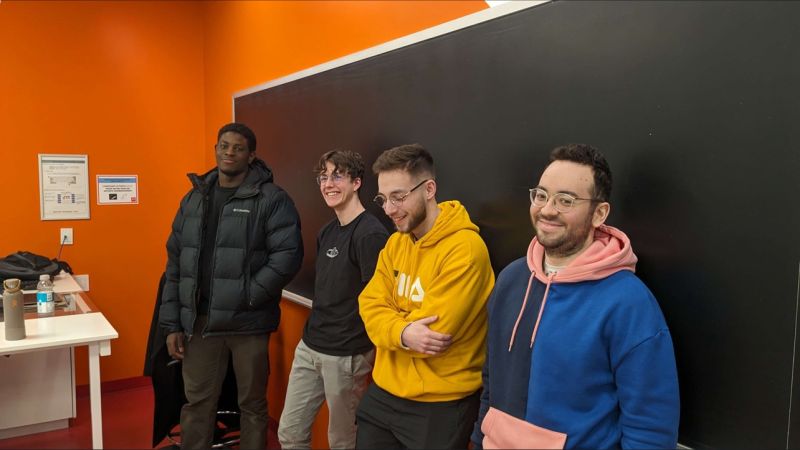
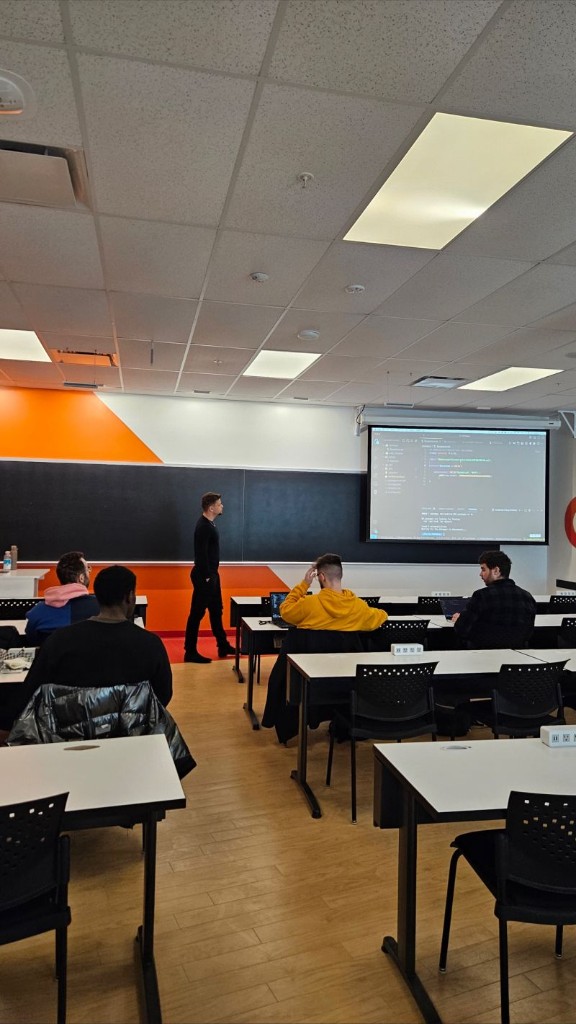
Byzantium framed follow-up workshops around other token types and deeper Solidity patterns. This one was the on-ramp.
Links
- LinkedIn thread / Byzantium recap
- Deployed contract (short link)
- OpenZeppelin Contracts
- Remix IDE
- Sepolia testnet explorer
Thanks to Khalil for teaching through the messy middle (wallets, faucets, failed txs), and to everyone who showed up for Byzantium’s first chain night.
Related posts
- Diagram prompts with ChatGPT and AIPRM — explaining systems in prose
- QcES lean discovery pitch — another ÉTS-adjacent learning format